



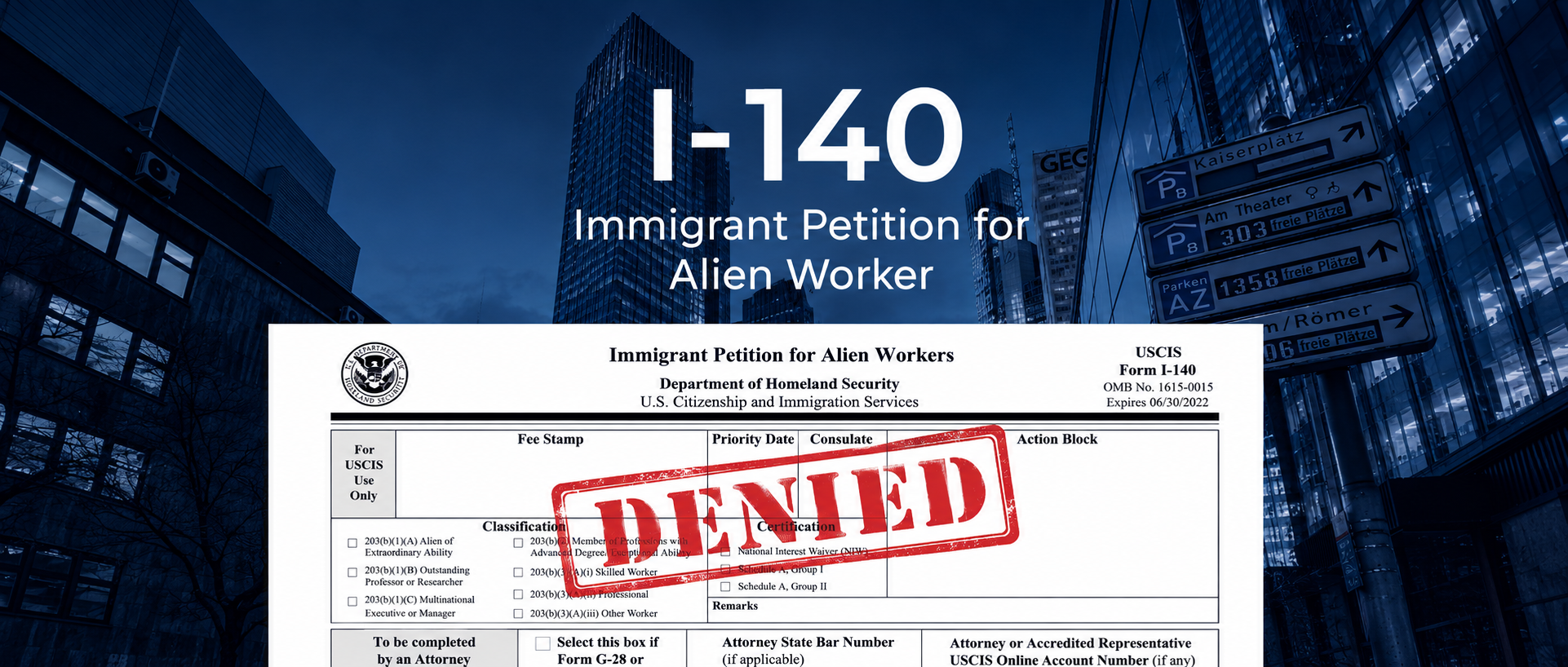
Your I-140 Was Denied and Your Child Is About to Turn 21. Does an Appeal Preserve CSPA Protection?

Yes, if the petition is ultimately approved through the administrative process, every day of the appeal counts as “pending time” in your child’s favor. USCIS’s own Policy Manual says so expressly: pending time under the Child Status Protection Act “includes administrative review, such as motions and appeals.” That single sentence means a petition filed two weeks before a child’s 21st birthday, denied, appealed, and approved a year later can still protect that child exactly as if it had been approved the day it was filed. But the protection has edges, and one path where it can quietly fail. This is one of the least-understood corners of employment-based practice, and we’ve had to map it precisely in a recent matter.
By Origin Law P.C. | July 20, 2026
The CSPA formula, in one paragraph
A derivative child’s “CSPA age” is their biological age at the time a visa becomes available, minus the time the petition was pending. Pending time runs from the filing date to the approval date. So the longer USCIS takes, including, critically, the time consumed by a motion or appeal that ends in approval, the larger the subtraction. If the category is current when the petition is finally approved, the math collapses to something elegant: the child’s CSPA age equals their age on the day the petition was filed. File before the 21st birthday, win the appeal, and the child is protected, whether the approval comes in six months or two years.
Why an appeal does not restart or truncate the clock
The intuition many families (and some practitioners) have is that a denial “stops” the petition, so the appeal period is dead time. The Policy Manual says otherwise: administrative review is part of pendency. A denial reversed on appeal, or a remand followed by approval, is one continuous administrative process from filing to final approval, and the CSPA subtraction includes all of it. What pendency does not include is consular returns, and, this is the trap, the Manual speaks only to administrative review.
The three risks families need to manage
1. Retrogression at the moment of approval. The subtraction is only as good as visa availability. If the category has retrogressed when the approval issues, availability slips to when the date becomes current again, and the child’s biological age keeps running in that gap while pending time does not. A petition filed two weeks before the birthday has a two-week cushion; a few weeks of retrogression can consume it. Monitor the Visa Bulletin monthly as a decision approaches.
2. The one-year “sought to acquire” clock. CSPA protection must be claimed within one year of visa availability. When an approval lands after a long appeal, that clock starts immediately. Immigrant visa fee paid or DS-260 submitted within days, not months.
3. The federal court gap. If the administrative process ends in dismissal and the petition is only revived through federal litigation, the Policy Manual’s pendency language does not clearly cover the judicial phase. Any court judgment or settlement reviving the petition should expressly provide that the petition is deemed to have remained pending from the original filing date through approval for CSPA purposes, or approve it nunc pro tunc to a protective date.
What this means practically
If your I-140 was denied and a child’s age is at stake, the appeal-versus-refile decision changes completely. A refiled petition is a new petition, with a new filing date and no CSPA bridge back. Keeping the original petition alive through appeal may be the only path that protects the child. Age math should be run to the day, in writing, before any procedural election is made.
Frequently asked questions
My child turned 21 while the appeal was pending. Is it over?
Not if the petition is eventually approved administratively. CSPA age is computed with the full pendency subtracted.
Does this work the same for consular processing and adjustment of status?
The core math is the same. For adjustment applications, USCIS currently uses the Final Action Dates chart for CSPA availability.
Does a motion to reopen count the same as an appeal?
Yes. The Policy Manual’s pendency language covers motions and appeals alike.
We’re considering refiling instead of appealing. What should we check first?
Run both the child’s CSPA math and the priority-date impact before electing.
Attorney advertising; general information, not legal advice.